


Wi-Fi 6 (802.11ax) Standards
Wi-Fi 6 (802.11ax) represents the latest evolution of the IEEE wireless standard, designed to deliver faster, more stable performance—especially in crowded, high-density environments. It supports both 2.4 GHz and 5 GHz bands and brings several major upgrades. MU-MIMO works on both frequency bands, allowing the AP to send and receive data from multiple devices at once, which significantly increases spectrum efficiency. The use of 1024QAM modulation boosts data transmission speeds by roughly 25% over Wi-Fi 5 (256QAM). OFDMA improves latency and overall throughput by allowing multiple users to transmit and receive simultaneously. Spatial Reuse (BSS coloring) reduces co-channel interference, and Target Wake Time (TWT)* extends battery life for client devices by coordinating sleep cycles.
MU-MIMO
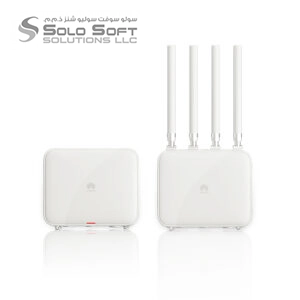
This AP supports MU-MIMO with up to six spatial streams—two on the 2.4 GHz band and four on the 5 GHz band. By transmitting to multiple devices at the same time, MU-MIMO effectively doubles the use of radio resources, increases network capacity, and improves user experience in dense environments.
Smart Antenna Array Technology
Equipped with a dual-band smart antenna array and an adaptive switching algorithm, the AP automatically analyzes its environment and user density. This enables more accurate signal coverage, better interference suppression, and improved signal quality for each connected device—providing smoother, more reliable wireless access.
High-Speed Access
With support for 160 MHz channel bandwidth, the AP offers more data subcarriers and wider transmission channels. Combined with 1024QAM and MU-MIMO, it delivers impressive rates of up to 0.575 Gbps on 2.4 GHz, 4.8 Gbps on 5 GHz, and 5.375 Gbps total device throughput.
High Density Boost Technology
To handle the challenges of high-density user environments—such as congestion, excessive roaming, and increased airtime consumption—Huawei integrates a suite of advanced optimization features.
SmartRadio Optimization
-
Smart roaming load balancing: Automatically distributes users across APs after roaming to maintain stable, balanced performance.
-
Dynamic Frequency Assignment (DFA): Detects adjacent-channel or co-channel interference and identifies redundant 2.4 GHz radios. These radios are then either switched to another mode (including 5 GHz on dual-5G models) or disabled to reduce interference.
-
Intelligent conflict avoidance: Enhanced EDCA and airtime scheduling ensure fair radio resource allocation for all users, improving efficiency and overall service quality.
Air Interface Optimization
In busy environments, low-rate clients consume excessive airtime and degrade network performance. To prevent this, the AP checks the signal strength of connecting devices, blocking weak-signal STAs from joining. It also monitors connected devices in real time and disconnects persistently low-rate ones, prompting them to reconnect to a stronger AP. This improves spectrum efficiency and increases the number of users the AP can handle.
5 GHz-First Steering
Since the AP supports both 2.4 GHz and 5 GHz, the 5 GHz-prior steering feature automatically guides devices onto the faster, less-congested 5 GHz band—improving overall performance and user experience.
Wired and Wireless Dual Security
Huawei APs incorporate multiple layers of security to ensure safe and reliable network access.
Authentication and Encryption
The APs support a full range of encryption and authentication methods, including WEP, WPA/WPA2-PSK, WPA3-SAE, PPSK, 802.1X (WPA/WPA2/WPA3), and WAPI. These mechanisms protect user identity, restrict unauthorized access, and safeguard all wireless data traffic.
Non-Wi-Fi Interference Detection
The APs can scan and analyze spectrum interference caused by non-Wi-Fi devices such as baby monitors, Bluetooth devices, cordless phones (2.4 GHz), wireless audio transmitters, game controllers, and microwave ovens. When paired with Huawei NCE-Campus, the system can also pinpoint the exact location of the interference to help administrators resolve issues quickly.
Rogue Device Monitoring
With built-in WIDS/WIPS, the APs can detect, categorize, block, and manage rogue access points and clients, ensuring a secure wireless environment.
Wired Access Authentication and Encryption
AP validity is verified through strict access control, while CAPWAP link protection, DTLS/IPsec encryption, and hardware-level encryption secure communication between APs and the controller.
Automatic Radio Calibration
With automatic radio calibration, the AP evaluates signal strength, channel conditions, and surrounding APs to build a live topology map. Based on interference levels—whether from authorized APs, rogue APs, or non-Wi-Fi sources—it automatically adjusts transmit power and channel selection to maintain peak performance and maximize network reliability.
Automatic Application Identification
Huawei APs include smart application control with full visibility and control over Layer 4–Layer 7 applications.
Traffic Identification
When paired with Huawei WLAN ACs, the APs can identify over 6000+ applications, including common office and productivity tools. Administrators can enforce policy controls such as rate limiting, prioritization, blocking, or scheduling to ensure bandwidth efficiency and protect key applications.
Traffic Statistics
Traffic usage can be monitored globally, by SSID, or by individual user. This gives administrators complete insight into application activity and allows them to optimize bandwidth allocation and improve network security.
Leader AP Mode
The AP can function as a “Leader AP,” integrating essential WLAN AC capabilities to manage other Fit APs in small or medium-sized environments. This eliminates the need for a separate AC, simplifies deployment, and reduces overall investment.
Cloud-Based Management
The AP fully supports cloud management, removing the need for an on-premises AC or authentication server. Through the cloud platform, advanced authentication options such as PSK, Portal, SMS, and social media login can be deployed. Cloud-based planning, deployment, inspection, and O&M simplify management while reducing CAPEX.
In multi-location scenarios, cloud APs can be pre-configured online and deployed on-site with simple plug-and-play installation—just power them on, connect to the switch, and scan the QR code. All settings are delivered automatically. Administrators gain full visibility across all sites, including device health, client connections, and network performance in real time.
Reviews
There are no reviews yet.